
Miscommunication in the Workplace: How to Prevent It
Miscommunication in the workplace rarely comes from one big mistake. It comes from small phrases, missing context, and assumed tone that snowball into rework, friction, and delays. The shift to email and chat makes this worse because our intent travels without voice, body language, or immediate feedback. If you work in a fast-moving team, you have seen it: a simple update reads like a demand, a polite request feels vague, and a decision gets interpreted three different ways.
This guide is a practical playbook for busy professionals and managers who want to reduce miscommunication in the workplace without writing novels. You will learn why written channels are riskier, how to define intent and audience, how to structure messages for clarity, how to signal warmth without ambiguity, how to confirm understanding, and how to build team systems that prevent repeats. Each section includes real examples and research-backed insights so you can apply the ideas immediately.
Why miscommunication in the workplace escalates in written channels
Missing cues create assumption gaps
When you speak, tone, pacing, and facial cues do a lot of hidden work. In writing, those cues vanish. The reader fills the gaps with their own stress level, assumptions, and history. That is why miscommunication in the workplace is more frequent in written channels: the same sentence can sound calm to you and curt to someone else. Reducing misunderstandings in written communication means reducing the number of possible interpretations.
We overestimate how well we convey tone
A classic study on email communication found that people overestimate how well they convey tone and emotion in email. Without paralinguistic cues, senders assume their intent is obvious, while recipients only see the words (Source: https://pubmed.ncbi.nlm.nih.gov/16393025/). This is a core reason email tone misunderstandings are so common.
Negative intensification bias makes neutral emails feel sharp
The BBC summarizes a related issue called negative intensification bias: readers often interpret written messages as more negative than the sender intended (Source: https://www.bbc.com/worklife/article/20210830-why-emails-often-read-more-negative-than-they-actually-are). The article notes how heavy email volume makes this worse. In short, miscommunication in the workplace is not only about wording, it is about the mental load of reading.
Micro-example: the "just checking" email
Consider the line, "Just checking on this." You might mean "friendly reminder," but the reader can hear "you are late." That tiny gap becomes a tone tax. Your goal is not to sound nicer; your goal is to make intent unmistakable.
Start with intent, audience, and stakes
Write the one-sentence intent first
Most workplace communication breakdowns start because the intent is buried. Start with a one-sentence intent statement: Are you informing, requesting, or deciding? The moment you force that sentence, you remove guesswork. If miscommunication in the workplace keeps recurring, an explicit intent line is the fastest fix. This is the simplest message clarity checklist you can adopt.
Map the audience and power dynamics
Your message lands differently with a boss, a peer, or a client. The YourThoughtPartner article on poor communication highlights how delayed leadership updates and overlooked remote employees fuel negativity and mistrust (Source: https://www.yourthoughtpartner.com/blog/poor-communication-in-the-workplace). That is an audience problem. Ask: What context do they already have? What do they worry about? What would success look like to them?
Choose channels that match the stakes
Spikenow contrasts a vague request with a clear, time-bound one that names the file and deadline (Source: https://www.spikenow.com/blog/team-collaboration/lack-of-workplace-communication/). That example shows how miscommunication in the workplace can be a channel issue, not just a wording issue. If the stakes are high, a short call can prevent a week of back-and-forth. If the stakes are low, a crisp written note preserves focus. Communication channel selection is a strategic choice.
Pre-send intent checklist
- What is the one-sentence intent?
- Who needs which context to act?
- What is the exact next step and deadline?
- Is this the right channel for the stakes?
Structure for scannability and clarity
Use BLUF to reduce ambiguity
BLUF stands for Bottom Line Up Front. If miscommunication in the workplace is a clarity problem, structure is your best lever. Start with the outcome, then provide context, then the ask. Your reader should not hunt for what you want. This single change cuts miscommunication in the workplace across email and chat.
One message, one decision
When you pack multiple requests into one note, you guarantee that at least one gets missed. Split requests by decision or owner. It feels slower, but it actually speeds execution because people can respond clearly. This is a simple way to avoid ambiguity in emails and chats.
Design for scanners, not readers
Nielsen Norman Group research shows that 79% of users scan pages rather than read word by word (Source: https://www.nngroup.com/articles/how-users-read-on-the-web/). Your teammates scan too. If your message is a wall of text, you are inviting miscommunication in the workplace. Use short paragraphs, meaningful line breaks, and bullet points. Put dates and owners on their own lines. A scannable email format is not a style choice; it is a comprehension strategy.
A simple clarity template
Subject: [Decision/Ask] + [Date]
Intent: I need your approval on X by Friday 3pm ET.

Context:
- Why it matters now
- What changed since last update

Ask:
- Please review Y and confirm by Z
Signal warmth without ambiguity
Make tone explicit with small markers
The Brandeis Ombuds guide notes that people overestimate their ability to convey tone in email (Source: https://www.brandeis.edu/ombuds/self-help/email-rules.html). The fix is not fluff; it is small, explicit markers of intent. A short line like "Thanks for jumping on this" anchors how the message should feel and reduces miscommunication in the workplace, especially with busy or remote teams.
Replace vague words with precise ones
Words like "soon," "ASAP," or "when you can" are ambiguity magnets. Replace them with an exact time and timezone. Replace "that" with a noun. Replace "it" with a file name or link. The more precise the language, the less the recipient has to infer. This is the fastest way to reduce misunderstandings in written communication.
Calibrate directness by relationship
Directness can be efficient, but it can also feel cold. For a peer, a short directive might be fine. For a client, you may need a sentence that signals partnership. Calibrating does not mean being indirect; it means matching the tone indicators in email to the relationship so your intent is not misread.
Before and after tone cleanup
Before: "Need the draft today." After: "Could you send the draft by 4pm today? I need it for the client review at 5pm. Thanks."
Build feedback loops that confirm understanding
Closed-loop acknowledgements prevent drift
Wudpecker lists common examples like misunderstood project deadlines and incomplete handoffs (Source: https://www.wudpecker.io/blog/12-miscommunication-examples-and-how-to-avoid-them). These are not just clarity failures; they are confirmation failures. Closed-loop communication means the receiver repeats back what they heard. It is the fastest way to stop miscommunication in the workplace before it becomes rework, especially for cross-functional handoffs.
Clarifying questions beat assumptions
If a request is even slightly ambiguous, ask a clarifying question. "Do you want option A or B?" is better than guessing. This is a feedback loop in communication that saves hours. Clarifying expectations in writing is not a sign of confusion; it is a sign of professionalism.
Document handoffs and decisions
Handoffs are where cross-functional communication breaks most often. A quick recap with owner, deadline, and decision removes doubt. This is especially important in cross-functional handoff communication where context often changes. It also helps remote team communication norms because the record persists beyond a live call.
A two-line confirmation script
Confirming: I will deliver the updated deck by Thursday 2pm ET.
Please reply "yes" if this matches your expectation.
Create team systems that reduce miscommunication at scale
Set shared norms for response time and channels
Individual skill helps, but systems win. Brosix cites remote work statistics and notes that 16% of people said it was difficult to collaborate with team members while working remotely (Source: https://www.brosix.com/blog/miscommunication-in-the-workplace/). That is not just a talent problem, it is a norms problem. Define which channel is for urgent work, which is for FYI updates, and what response time is expected. Miscommunication in the workplace drops when expectations are explicit and enforced.
Train for feedback and nonverbal awareness
Catapult lists nonverbal unawareness and poor communication between employees and management as common causes of workplace misunderstandings (Source: https://letscatapult.org/5-causes-of-miscommunication-in-the-workplace/). That means training should not only cover writing skills but also listening, feedback, and awareness of how messages feel. Pair this with psychological safety so people ask clarifying questions without fear.
Measure and iterate
VantageCircle highlights examples where miscommunication is tied to emotions like feeling unappreciated or unclear about expectations (Source: https://www.vantagecircle.com/en/blog/miscommunication-examples/). Add simple metrics: how often decisions need rework, how many clarifications are required, and whether deadlines slip due to unclear ownership. Treat this as a communication operating system and review it quarterly to keep miscommunication in the workplace from creeping back.
A lightweight miscommunication scorecard
Track three numbers monthly: rework caused by unclear messages, missed deadlines due to unclear ownership, and response time variance across channels. These indicators make miscommunication in the workplace visible, which makes it fixable.
Custom visuals
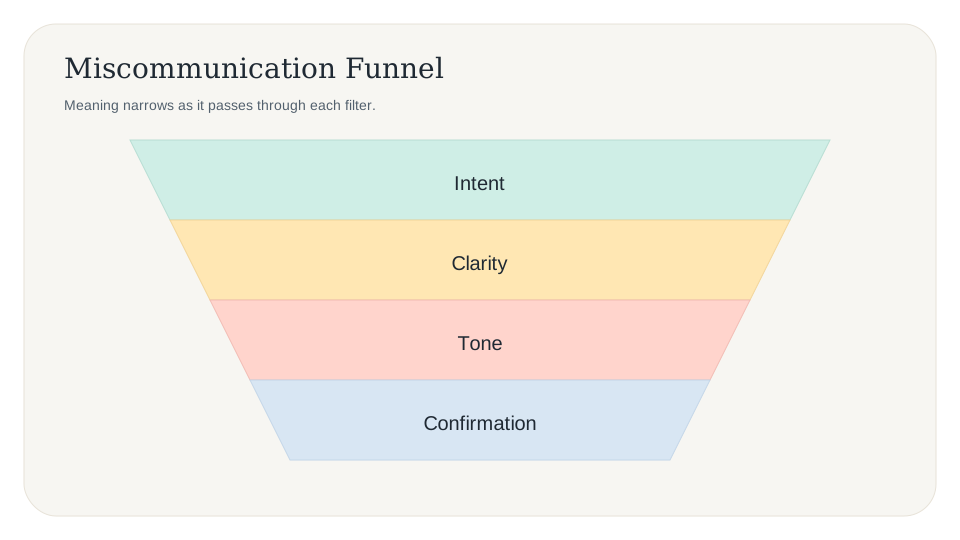 Miscommunication funnel: meaning narrows at each filter (intent, clarity, tone, confirmation).
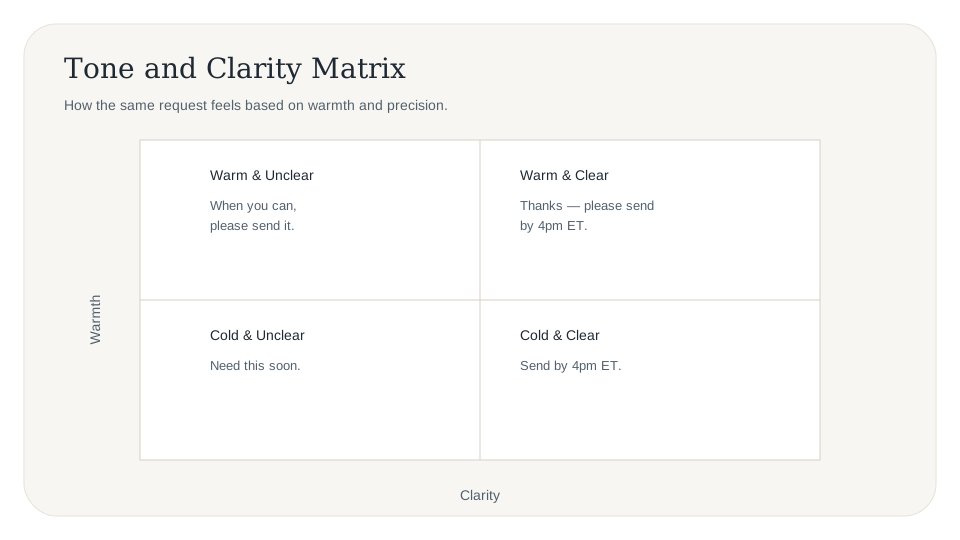 Tone and clarity matrix: examples of how the same request lands based on warmth and precision.
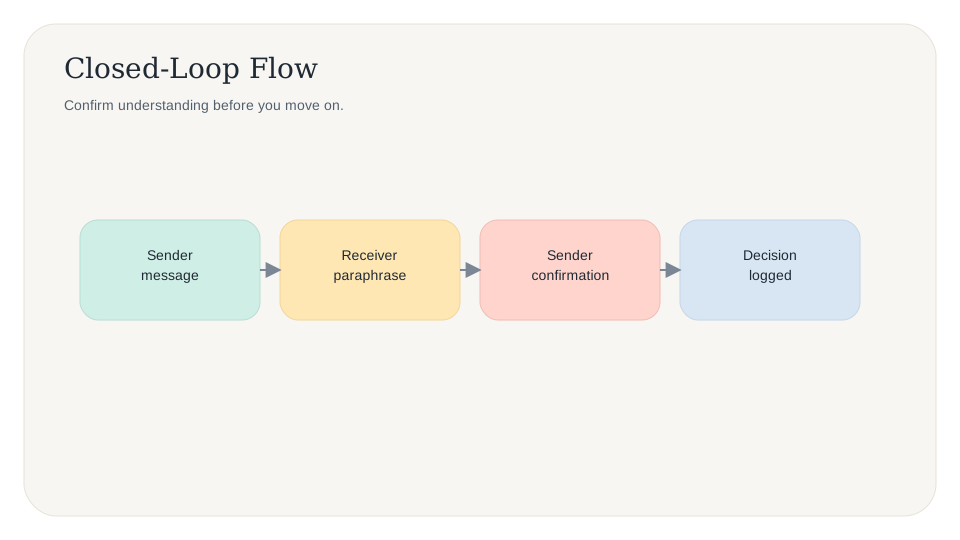 Closed-loop flow: confirm understanding before you move on.
Quick Takeaways
- Miscommunication in the workplace is most dangerous in written channels because tone and context disappear.
- Write the intent first, then the context, then the ask to reduce ambiguity.
- Design for scanners with BLUF structure, bullets, and clear ownership.
- Add explicit tone markers and remove vague words to prevent email tone misunderstandings.
- Use closed-loop acknowledgements and written recaps to lock in shared understanding.
- Build team norms and measure rework so miscommunication in the workplace does not repeat.
FAQs
How do I reduce miscommunication in the workplace for remote teams?
Set remote team communication norms for response times, channel use, and decision logging. Remote teams need explicit conventions because they cannot rely on hallway context or body language.
What is the best way to avoid misunderstandings in written communication with clients?
Use a scannable email format with a clear intent line, exact deadlines, and a short confirmation request. This reduces ambiguity and reinforces professionalism.
Why are email tone misunderstandings so common?
People overestimate their ability to convey tone in email and readers often interpret messages more negatively than intended. Adding explicit tone indicators in email helps align intent and impact.
What should a message clarity checklist include?
At minimum: the intent sentence, the decision or action owner, the deadline with timezone, and any required links or attachments. This prevents workplace communication breakdowns.
When should I move a conversation from chat to a call?
Switch channels when the stakes are high, emotions are elevated, or multiple clarifications are needed. Communication channel selection is part of reducing miscommunication in the workplace.
Conclusion
Miscommunication in the workplace is not a personal flaw; it is a predictable outcome of missing context, vague intent, and weak confirmation loops. The good news is that small, repeatable behaviors make a big difference. Start by writing your intent explicitly, then structure messages so they are scannable and precise. Add warmth markers so tone does not get misread, and use closed-loop acknowledgements to confirm understanding. Finally, treat communication as a system: set team norms, document decisions, and measure rework.
If you apply just two changes this week, make them these: write the one-sentence intent at the top of every message, and confirm understanding before you move on. Those two steps alone reduce miscommunication in the workplace more than any fancy tool. Once the basics are stable, build the team-level habits that keep it that way. Clear writing is not about longer writing; it is about less guessing and lower miscommunication in the workplace.
Reflxy helps you check the emotional impact of a draft before you hit send. It does not rewrite your message. It gives you the clarity, warmth, and risk signals so you can decide with confidence.
Share your feedback
If this helped, share it with a teammate who is tired of rerunning the same conversations. What is the single message you wish you could rewrite this week?
References
- https://pubmed.ncbi.nlm.nih.gov/16393025/
- https://www.bbc.com/worklife/article/20210830-why-emails-often-read-more-negative-than-they-actually-are
- https://www.brandeis.edu/ombuds/self-help/email-rules.html
- https://www.nngroup.com/articles/how-users-read-on-the-web/
- https://www.wudpecker.io/blog/12-miscommunication-examples-and-how-to-avoid-them
- https://www.spikenow.com/blog/team-collaboration/lack-of-workplace-communication/
- https://www.brosix.com/blog/miscommunication-in-the-workplace/
- https://letscatapult.org/5-causes-of-miscommunication-in-the-workplace/
- https://www.vantagecircle.com/en/blog/miscommunication-examples/
- https://www.supernormal.com/blog/miscommunication-in-the-workplace
- https://www.yourthoughtpartner.com/blog/poor-communication-in-the-workplace